

Small Businesses Risk Falling Behind as Business Data Goes Underused
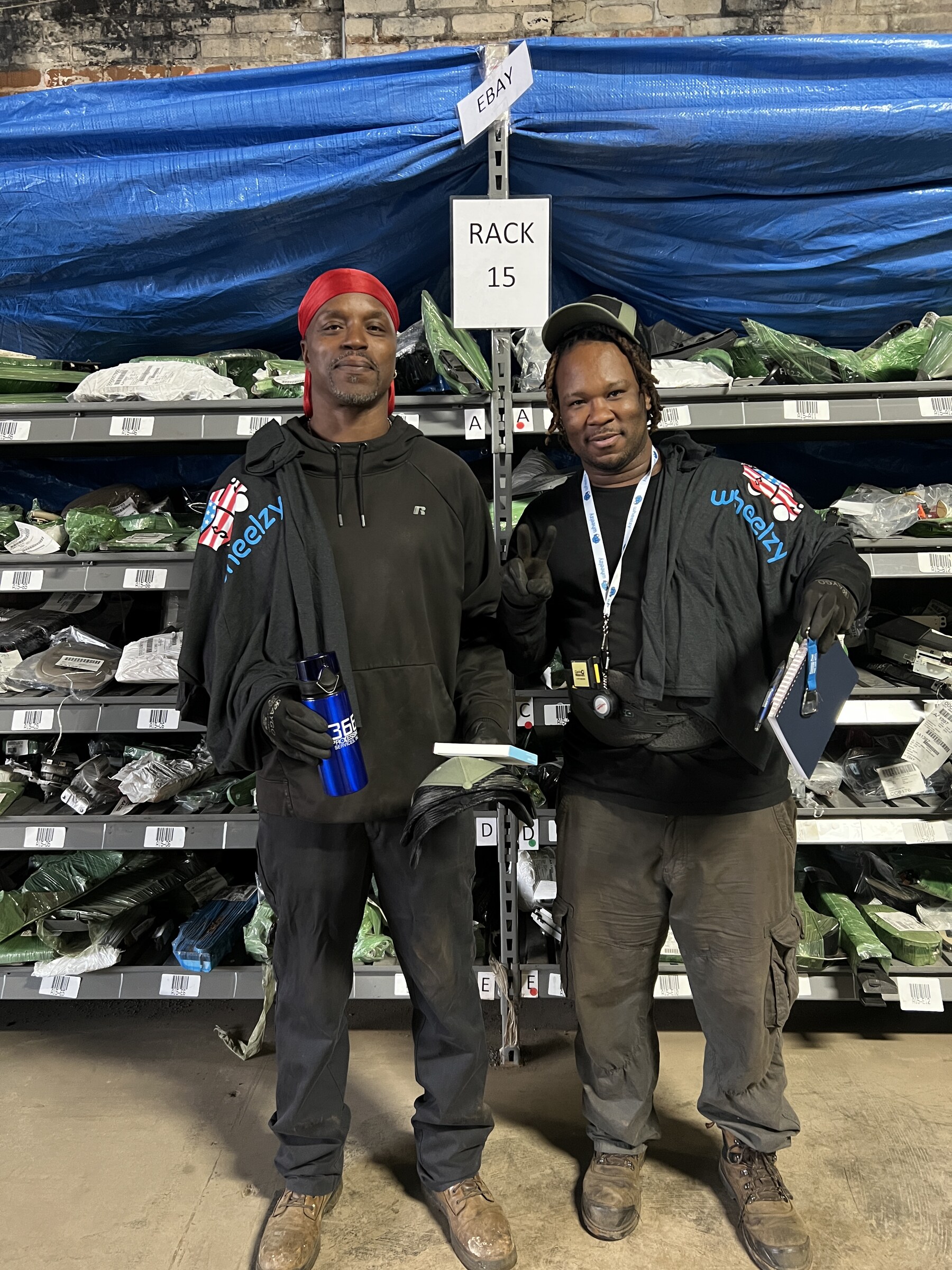
Select Auto Parts team members stand in front of labeled inventory racks in Milwaukee, illustrating how organized records connect people, physical assets and everyday operations.
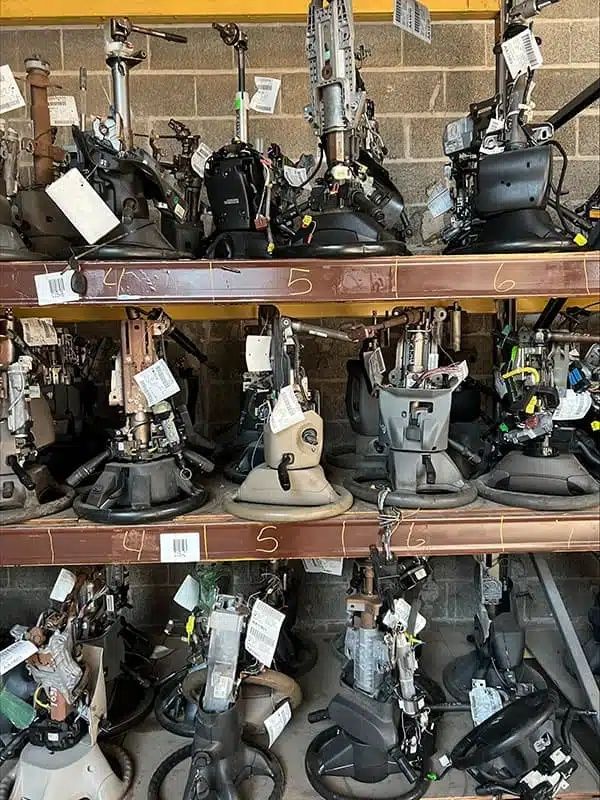
Tagged steering-column inventory at Select Auto Parts shows how physical assets can be documented to support availability, pricing and customer service.
As reported AI use rises at larger firms, everyday business records may become a new dividing line in small-business competitiveness.
Inventory records, customer questions, service requests, pricing histories, sales notes, photographs, emails and calendars can help owners examine customer demand, workflow bottlenecks and recurring decision patterns when those records are organized, relevant and reviewed by qualified staff. Yet at many small firms, those records remain scattered across paper files, inboxes, phones and disconnected software.
That gap matters beyond the owner’s office. Small businesses anchor local employment, supply chains and neighborhood services. When firms cannot readily organize and use operational information, owners may face slower decisions and missed opportunities. Over time, those constraints may affect service quality, efficiency and a business’s readiness to adapt.
New federal data show that reported AI use varies substantially across businesses. In a May 2026 analysis of U.S. Census Bureau Business Trends and Outlook Survey data collected from December 14, 2025, through May 3, 2026, overall reported AI use hovered between 17 and 20 percent. Thirty-seven percent of firms with at least 250 employees reported using AI in business operations. In the data-collection period ending May 3, 2026, 32 percent of firms with 100 to 249 employees reported AI use; less than 20 percent of firms with four or fewer employees reported using AI. Census researchers found that reported AI use increased among firms with at least 20 employees, while it did not change significantly among firms with fewer than 20 employees.
The figures do not prove that every small company needs an AI system. They suggest a potential concern: if larger firms continue to adopt AI faster, the capacity to organize, govern and use business information responsibly could become an additional competitive advantage for better-resourced organizations.
“Small businesses do not always have a data shortage. We often have an organization problem,” said Natasha Broxton, founder of The Alitura Group and operator of Select Auto Parts & Sales in Milwaukee. “The information is there, but owners need a practical way to connect it to the decision in front of them.”
A separate 2026 Census working paper found that 18 percent of firms used AI in a business function during the November 2025 through January 2026 period. Among AI-using firms, 57 percent integrated AI in three or fewer business functions. Most users, 66 percent, reported relying on AI solely to augment tasks. Sales and marketing, strategy and business development, and information technology were the most common functions.
That pattern points to a realistic opportunity for smaller firms. It may be a narrow, well-managed workflow that helps an owner compare customer requests with available inventory, summarize recurring service issues, identify unanswered inquiries or review pricing patterns more consistently.
At Select Auto Parts, the work begins with operational information generated by the business itself. Inventory records, parts descriptions, customer inquiries and workflow notes can help staff answer availability questions and make more informed operating decisions. Broxton uses this experience as a case study when advising companies through The Alitura Group, while emphasizing that technology does not replace human verification, industry knowledge or responsibility.
“The goal is not to put every record into an AI tool,” Broxton said. “It is to identify a useful question, protect sensitive information, test the process and keep a qualified person accountable for the answer.”
That caution is important. Customer information, employee records, proprietary pricing and confidential communications require appropriate access controls. AI output can be incomplete or wrong, and poorly organized source information can produce unreliable results faster. The National Institute of Standards and Technology’s voluntary AI Risk Management Framework encourages organizations of every size and sector to manage AI risks while promoting trustworthy and responsible use.
For many small firms, data readiness should come before tool selection. A practical starting point is to inventory where business information lives, choose one recurring decision that would benefit from better evidence, standardize the relevant fields, limit access, test on a small scale and verify results against the original records. Owners should review a vendor’s applicable terms, privacy notice and data-processing terms to understand what information the vendor retains, how it is secured, whether it may be used for model improvement or training, and what controls are available to limit that use.
The public-interest challenge is not simply persuading more owners to try AI. It is ensuring that local firms have access to the training, technical assistance and basic data practices needed to use it safely. Chambers of commerce, Small Business Development Centers, lenders, industry associations and procurement-assistance organizations can help by teaching data organization and governance alongside AI tools.
If the smallest businesses remain unable to use the information they already own, the productivity benefits of AI may accrue disproportionately to firms with dedicated analysts, integrated software and larger technology budgets. Helping small companies build responsible, human-led data practices may help improve customer service and competitiveness and may support the resilience of the communities that depend on them.
To request an interview, keynote presentation or executive workshop with Natasha Broxton on practical AI adoption, small-business data readiness and responsible operating systems, visit https://alituragroup.com/speaking.
About Natasha Broxton
Natasha Broxton is the founder of The Alitura Group and an operator of Select Auto Parts & Sales in Milwaukee. She speaks and advises on practical AI adoption, small-business systems, operational resilience and the changing demands placed on entrepreneurs and suppliers.
Natasha Broxton
Alitura Group
+1 414-763-2475
email us here
Visit us on social media:
LinkedIn
Instagram
Facebook
YouTube
Legal Disclaimer:
EIN Presswire provides this news content "as is" without warranty of any kind. We do not accept any responsibility or liability for the accuracy, content, images, videos, licenses, completeness, legality, or reliability of the information contained in this article. If you have any complaints or copyright issues related to this article, kindly contact the author above.
